Introduction
The National Weather Service chart says a 20 mph wind turns a 20°F morning into a 4°F one (National Weather Service, 2001 wind chill index). That four degrees of difference between the number on your phone and the number on your skin explains why so many people ask what should I wear today and still end up cold, sweaty, or soaked by 10 a.m.
The real problem isn’t taste. It’s information. Your forecast app shows five numbers, your closet holds forty options, and nobody connects the two. This guide connects them with a simple method, a few tables you can screenshot, and outfit formulas for men, women, teens, and school days.
And yes, it still cares about looking good. Cold-proof and boring are not the same thing.
Key Takeaways
- Dress for the feels-like temperature, not the headline number.
- Use the 3-Number Outfit Method: feels-like, swing, and wet.
- Layer in threes below 40°F, and skip cotton against your skin in the cold.
- A 70-degree day still needs a plan for shade, wind, and evening.
- School outfits work best with one removable layer and a packable shell.
- Check tomorrow’s hourly forecast the night before to cut morning stress.
Here’s the plan, section by section.
In this guide: the 30-second answer, reading your weather app, temperature bands, winter layering, outfits for women, girls, men, and school, planning tomorrow, a mini case study, tradeoffs, and a full FAQ.
What Should I Wear Today? The 30-Second Answer
Quick Answer: To decide what to wear today, check the feels-like temperature, the gap between the morning low and afternoon high, and the rain chance. Dress for the feels-like number, add one removable layer if the day swings 15 degrees or more, and carry a waterproof shell if rain tops 40 percent.
[IMG: Phone showing a weather app next to three folded outfit layers on a bed]
What Is the 3-Number Outfit Method?
The 3-Number Outfit Method is defined as a three-step check that converts a forecast into an outfit: the feels-like temperature sets your base outfit, the daily swing sets your extra layer, and the wet number (rain chance) sets your outer layer. It takes about 30 seconds and works in any climate.
- Feels-like. Read the feels-like temperature, not the actual one. This picks your core outfit from the table below.
- Swing. Subtract the morning low from the afternoon high. A gap of 15 degrees or more means you need a layer you can take off.
- Wet. If rain chance is 40 percent or higher, or the forecast mentions snow, your outer layer must block water.
That’s the whole method. Honestly, most guides skip the swing step, and it’s the one that saves you at 3 p.m.
Pro Tip: On a day that starts at 48°F and peaks at 71°F, wear a short-sleeve tee under an overshirt or cardigan. A swing of 23 degrees means the overshirt is off by lunch, and you never carry a heavy coat for no reason.
What to Wear Based on Weather App Numbers
Quick Answer: What to wear based on a weather app comes down to one number: the feels-like temperature. Wind, humidity, and sun change how warm you feel, so the feels-like figure predicts comfort far better than the printed temperature.
Most weather apps, including Apple Weather, AccuWeather, and The Weather Channel, display a feels-like figure. Tools built just for outfits, such as Clothes Forecast and WeatherFit, turn that number into a suggestion. They’re handy. But they don’t know whether you’ll stand at a bus stop for 20 minutes or sit in a heated office, and that matters more than most people expect.
Why Feels-Like Beats the Actual Temperature
Wind chill refers to the cooling effect of moving air on exposed skin, expressed as the temperature it feels like. According to the official National Weather Service wind chill chart, a 20 mph wind makes 20°F feel like 4°F, and 0°F with a 20 mph wind feels like minus 22°F, cold enough to cause frostbite on exposed skin in about 30 minutes.
The wind chill formula only applies at 50°F and below, so for warm weather, watch humidity instead. Many forecasters treat a dew point above 65°F as muggy, which is when linen and loose cotton earn their keep.
Our Data: How Far 15 mph Wind Pulls Down the Feels-Like Number
Our Data: We applied the National Weather Service wind chill formula to a steady 15 mph breeze at four common temperatures. Wind drops the feels-like temperature by 5 degrees at 50°F and by 14 degrees at 20°F.
| Actual Temperature | Feels-Like With 15 mph Wind | Degrees Lost to Wind |
| 50°F | about 45°F | 5 |
| 40°F | 32°F | 8 |
| 30°F | 19°F | 11 |
| 20°F | 6°F | 14 |
The colder it gets, the more each mile per hour of wind costs you. That’s why a windproof outer layer matters more at 20°F than a thicker sweater does
What to Wear by Temperature in 2026
Quick Answer: Match your outfit to the feels-like temperature band. Below 20°F needs a full winter system, 40 to 49°F needs a lined jacket, 60 to 69°F needs a light layer you can remove, and 70°F and above needs breathable single layers.
| Feels-Like Temperature | Base Outfit | Add-On |
| Below 20°F | Thermal base, fleece, insulated parka, insulated boots | Hat, mittens, neck gaiter |
| 20 to 39°F | Long-sleeve base, sweater or fleece, wool coat or puffer | Hat, gloves, scarf |
| 40 to 49°F | Long-sleeve top, mid layer, lined jacket or trench | Light scarf |
| 50 to 59°F | Tee or long sleeve with cardigan or denim jacket | Closed shoes, light scarf |
| 60 to 69°F | Tee with overshirt or thin knit, jeans or trousers | Layer in your bag |
| 70 to 79°F | Tee, linen shirt, or sundress with light trousers or shorts | Thin layer for evening |
| 80°F and above | Loose, breathable fabrics in light colors | Sunglasses, hat, water bottle |
These are editorial guidelines built around typical comfort, not lab results. Your own thermostat runs hot or cold, so shift every band by five degrees in either direction after a week of testing it.
What Do You Wear in 70 Degree Weather?
In 70 degree weather, wear a T-shirt or light button-up with jeans, chinos, or a midi skirt, and keep a thin layer nearby for shade and evening. Seventy feels perfect in direct sun and surprisingly cool in shade or wind, so a lightweight cardigan, overshirt, or denim jacket solves the problem without adding bulk. Sneakers, loafers, and sandals all work.
For current outfit inspiration at this temperature, browse FreshMags outfit ideas to wear in 2026.
What to Wear Today Weather Winter: Layering Rules
Quick Answer: For winter weather, wear three layers: a moisture-wicking base, an insulating middle, and a windproof outer shell. Add a hat, gloves, and insulated waterproof boots. Avoid cotton against your skin because wet cotton loses its insulation.
Layering is defined as stacking thin garments so trapped air between them holds heat, and so you can add or remove pieces as conditions change. The CDC’s National Institute for Occupational Safety and Health (NIOSH) publishes cold stress guidance that recommends at least three layers of loose-fitting clothing, and notes that cold stress can set in even at cool temperatures above 40°F when you get wet from rain or sweat (CDC NIOSH, 2026).
Cotton deserves its own warning. MedlinePlus, the U.S. National Library of Medicine’s health resource, explains in its advice on dressing in layers for cold weather that cotton absorbs moisture and holds it against your skin, which makes you colder. Lightweight wool, polyester, or polypropylene works better as a base layer.
The Winter Outfit in Five Steps
- Start with the base. Pick a thin merino wool or synthetic long-sleeve top. Brands like Uniqlo (HeatTech), Smartwool, and Patagonia make reliable ones.
- Add insulation. A fleece, wool sweater, or lightweight down vest goes over the base.
- Block the wind. Finish with a puffer or shell from North Face, Columbia, or L.L.Bean.
- Protect the edges. Hat, gloves or mittens, and wool socks do more per dollar than any coat upgrade.
- Choose your boots. Insulated, waterproof soles keep your feet from becoming the weak point.
Clothes for Winter Weather: Men
For men asking what type of clothes to wear today weather men can rely on in winter, the formula is straightforward. Start with a merino or synthetic base, add a flannel or fleece, and top it with a wool overcoat for the office or an insulated jacket for the commute. Dark denim or wool trousers beat thin chinos below 35°F, and leather boots with a rubber sole handle slush.
Pro Tip: If you walk 10 minutes to the train in 25°F weather, dress slightly cool at the door. You’ll warm up as you move, and sweat under a coat is what actually chills you later.
What to Wear Today Weather Female and Girl Outfits
Quick Answer: Women and girls get the best results by choosing one anchor piece, like a denim jacket, slip skirt, or wide-leg jeans, then adjusting the layers around it to the feels-like temperature.
What to wear today weather female searches usually mean one of two things: practical comfort or a look worth photographing. You can have both. Pick the anchor first, then let the forecast decide what goes under and over it.
What Should I Wear Today Girl: Three Formulas
- Under 40°F: Wool coat, fine-knit turtleneck, lined trousers or thick tights with a skirt, ankle boots.
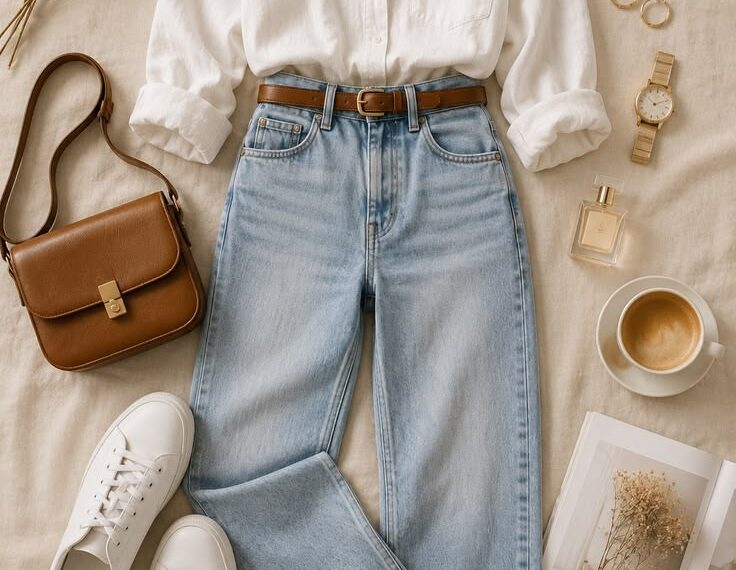
- 40 to 60°F: Trench or denim jacket, long-sleeve tee, wide-leg jeans, loafers or white sneakers.
- Above 60°F: Slip skirt or sundress, cropped cardigan, sandals or low-top sneakers.
A slip skirt, for example, works with tights and boots in November and with sandals in June. That kind of flexibility is the whole idea behind a repeatable formula.
What Should I Wear Today Teen Girl: Easy Wins
For a teen girl, comfort and confidence matter more than trend-chasing. Wide-leg jeans, a baggy tee, and a zip hoodie handle most 50 to 70°F days. Add a cropped puffer below 40°F. Swap sneakers for chunky boots when it rains. Keep accessories simple: a tote, a beanie, and one piece of jewelry.
What Should I Wear Today Weather for School?
Quick Answer: For school, choose an outfit built around one removable mid layer, such as a zip hoodie or cardigan, and carry a packable rain shell. Classrooms often run warmer than the walk to school, so students need to adjust quickly.
School days create a unique problem. Students stand at a bus stop in the cold, then sit in a heated room for six hours, then walk home in the afternoon warmth. A single heavy coat fails on all three counts.
Here’s what works:
- Cold mornings: Tee, zip hoodie, light puffer, beanie.
- Rainy days: Water-resistant sneakers, packable shell, quick-dry pants.
- Gym days: Pack a spare tee, since sweat in a cold hallway chills you fast.
Pro Tip: Put tomorrow’s outfit on a chair the night before. Teens who do this skip the 7 a.m. panic and stay closer to the forecast they actually checked.
Clothes Forecast: What to Wear Tomorrow
Quick Answer: To plan what to wear tomorrow, check the hourly forecast the night before and note three things: the morning low, the afternoon high, and the rain chance. Then lay out the outfit using the 3-Number Outfit Method.
Planning ahead beats guessing in the morning. A clothes forecast, meaning a weather outlook translated into outfit suggestions, helps most when you check it at night. Tools like Clothes Forecast and WeatherFit do the translation for you. Your phone’s built-in weather app gives the raw numbers.
Here’s a quick routine:
- Check the hourly view for tomorrow around 8 p.m.
- Write down the low, high, and rain chance.
- Lay out the base outfit from the temperature table.
- Add the extra layer if the swing is 15 degrees or more.
- Pack the shell if rain chance is 40 percent or higher.
For broader style ideas to fold into your routine, browse the fashion and style guides.
Maya’s Before and After
Illustrative scenario (a composite, not a real client): Maya is a college student in Chicago who walks 15 minutes to class. On a 38°F morning with a 15 mph wind, the feels-like temperature sits near 29°F.
Before: Cotton hoodie, jeans, canvas sneakers. She’s cold within five minutes, sweaty in the lecture hall, and cold again on the walk home.
After: Merino base layer, fleece, and a windproof shell, with a hat and wool socks. She takes off the fleece in class and puts it back on for the walk. One bag, one outfit, three comfortable settings.
The change took zero new trends and about $90 in basics. That’s the point. The right layers solved a problem that a bigger coat never would have.
The Tradeoffs of Dressing by Forecast Data
Forecasts miss. A 30 percent rain chance doesn’t mean a 30 percent chance of staying dry, and hourly predictions can shift by afternoon. Feels-like numbers also average out personal differences, so your sister may run warm while you run cold.
Layering has costs too. More pieces mean more weight, more laundry, and more to forget on a train. And a good base layer, well, more precisely a good merino one, isn’t cheap. A realistic starter kit of base layer, fleece, shell, and warm accessories runs roughly $120 to $250 at stores like Uniqlo, Target, and REI (our estimate, prices vary).
Still, a forecast-based outfit beats guessing. It’s just not a substitute for looking out the window.
Frequently Asked Questions About What to Wear
What should I wear today if I only have 30 seconds?
Check the feels-like temperature, add a light layer if the day swings 15 degrees or more, and add a waterproof outer layer if rain chance tops 40 percent. Those three checks cover almost every forecast. Pick your base outfit from the temperature table, then adjust. If you’re rushed, the swing layer is the one worth remembering, because it covers the gap between a cold morning and a warm afternoon.
What do you wear in 70 degree weather?
Wear a T-shirt or light button-up with jeans, chinos, or a midi skirt, plus a thin layer for the evening. Seventy degrees feels warm in the sun and cool in shade. A denim jacket or cardigan covers both. Sandals, loafers, and sneakers all work, and linen or breathable cotton keeps you comfortable if humidity is high.
What type of clothes should I wear today, weather men?
Match fabric to the feels-like temperature: breathable cotton or linen above 70°F, an overshirt or light jacket from 50 to 69°F, and a three-layer system below 40°F. Add a wool coat for the office, and waterproof boots when rain or slush shows up. Fit matters too. Loose layers trap heat better than tight ones.
What to wear today in winter weather when it’s below freezing?
Wear a moisture-wicking base layer, an insulating fleece or wool mid layer, and a windproof outer layer, plus a hat, gloves, and insulated boots. Skip cotton against your skin. If wind is strong, add a neck gaiter, since wind chill can drop the feels-like temperature by 14 degrees at 20°F.
What should I wear today for school if the weather keeps changing?
Build the outfit around a removable mid layer and carry a packable rain shell. Classrooms run warm and walks run cold, so a zip hoodie or cardigan lets you adjust in seconds. Keep a spare pair of socks in your bag for wet days. They cost almost nothing and make a rainy afternoon far more bearable.
What should I wear today as a girl or teen girl who wants to look put together?
Pick one anchor piece, such as a denim jacket, slip skirt, or wide-leg jeans, then adjust the layers around it to the feels-like temperature. Neutral basics mix easily, so a few well-chosen pieces create dozens of outfits. Add one accessory, like a tote or beanie, to finish the look.
What’s the best way to figure out what to wear tomorrow?
Check tomorrow’s hourly forecast the night before and note the morning low, the afternoon high, and the rain chance. Then lay out the outfit using the 3-Number Outfit Method. If you tend to run late, put the clothes on a chair or hook so the decision is already made when you wake up.
Hey, what’s the best way to dress when the forecast says rain but it’s warm?
Wear breathable fabrics under a lightweight waterproof shell, and choose shoes that dry quickly. Warm rain makes heavy raincoats feel stuffy. A packable shell with underarm vents keeps you dry without trapping heat. Skip cotton jeans if possible, since wet denim stays heavy for hours.
Is a clothes forecast tool worth using?
Yes for speed, but a clothes forecast tool still needs your judgment about wind, shade, and how long you’ll be outside. Tools like Clothes Forecast and WeatherFit save time, especially on busy mornings. Compared with checking a regular weather app, they remove the translation step. Compared with looking out the window, they give you the afternoon, not just the morning.
Why does my outfit feel wrong even when the temperature matches?
Wind, humidity, sun exposure, and activity level change how a given temperature feels. If you’re cold at 55°F, check the wind speed and whether you’re sitting in shade. If you’re sweaty at 55°F, you may have worn a non-breathable layer, or you may have walked fast in a coat meant for standing still. Adjust the layer, not the whole outfit.
Dress for the Feels-Like Number
The question “what should I wear today” gets easier once you stop reading the temperature and start reading the conditions. Check three numbers: feels-like, swing, and wet. Build your outfit from the temperature bands, add layers in threes when it’s cold, and keep one removable piece within reach.
The forecast isn’t perfect, and your closet doesn’t need to be either. A handful of reliable layers beats a packed wardrobe and a bad guess.

 By